Laser Science Laboratory
-->
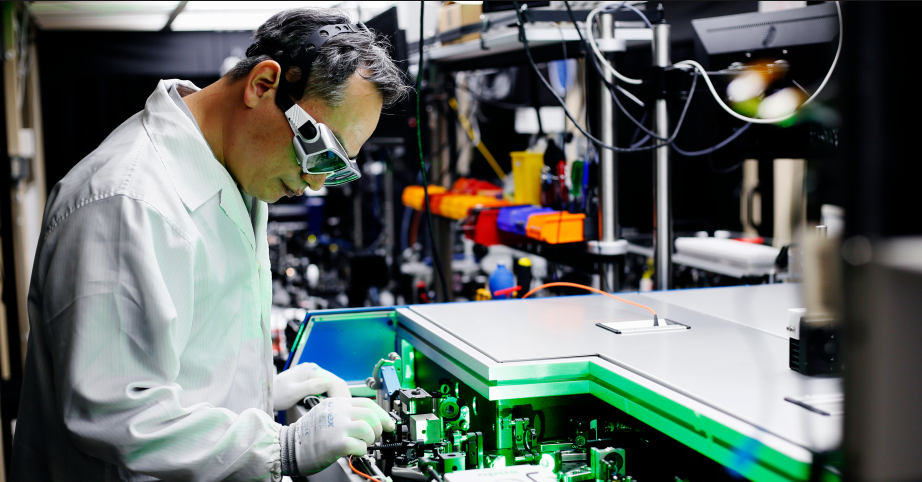
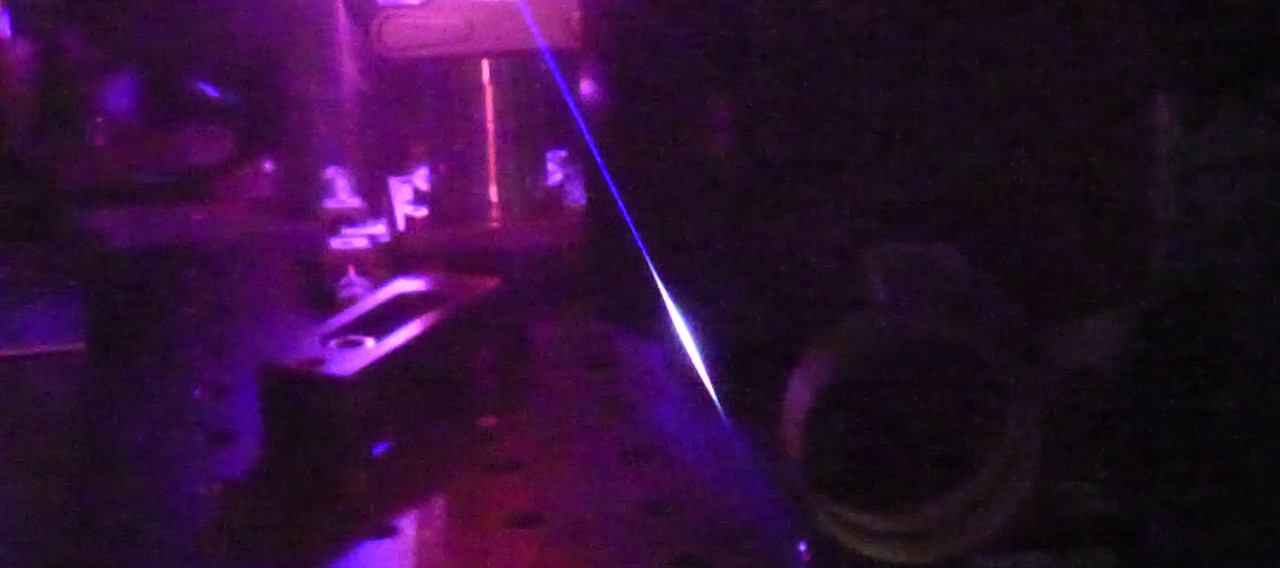
Laser Science Laboratory is a laboratory started in April 2019. We have knowledge and technology to design and build lasers with top-class performance in the world. For example, we have developed a laser which generates the world shortest 7 femtosecond infrared light pulses, and a high-performance ultrafast fiber laser which uses a fluoride fiber as a laser medium.
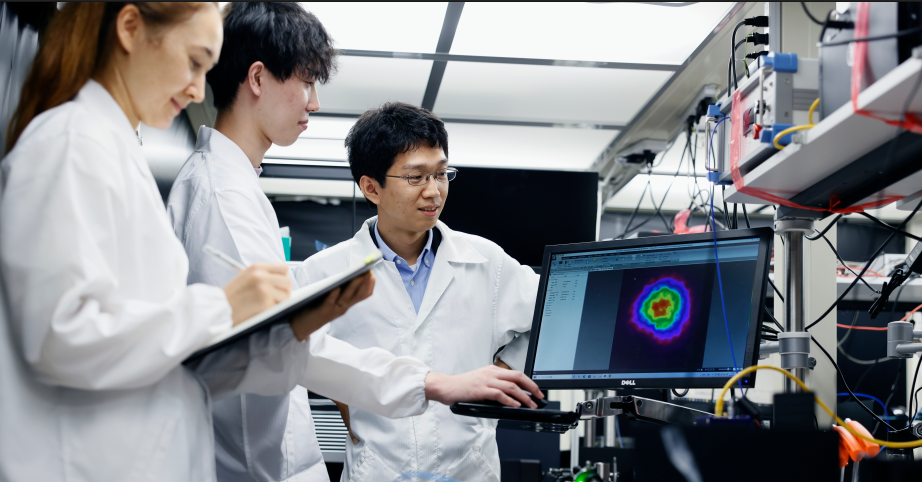
We are also developing unique measurement technologies using these novel lasers. Examples include non-contact, label-free chemical imaging, and background-free optical absorption spectroscopy that records light absorption as a positive signal. Another major feature is our unique technology to directly measure light waves. We also conduct joint research projects with life science laboratories and companies.
When high-intensity light is focused into a medium under certain conditions, the increase in the refractive index due to nonlinear effects is balanced with the decrease in the refractive index due to the plasma generated by the multiphoton ionization, and the light propagates over a long distance with a very small diameter. This phenomenon is known as filamentation. Using this filamentation effect, we have succeeded in generating the world's shortest 7 femtosecond mid-infrared light pulse[IEEE J. Sel. Top. Quantum Electron. 21 8700612 (2015), Opt. Express 28 36527 (2020) etc.]. This is a breakthrough technique that can easily generate extremely short pulses in which the electromagnetic field oscillates only once, and is a technology attracting attention in the field of ultrafast optical science.
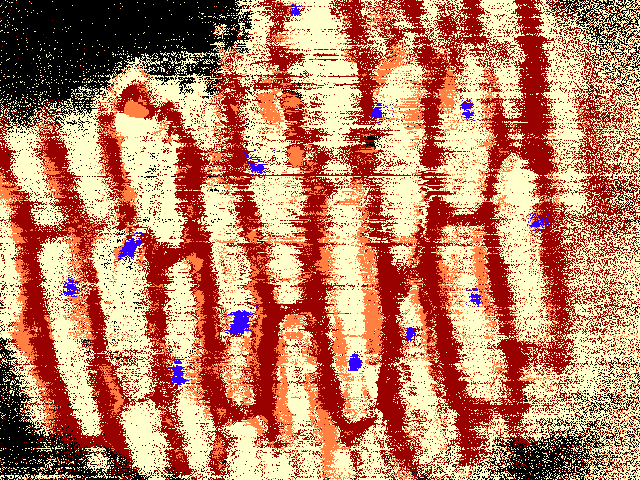
In addition, we are developing high-speed infrared spectroscopy, femtosecond pump-probe spectroscopy, and hyperspectral imaging using the ultimately short mid-infrared pulses [ Nat. Commun. 14 3929 (2023), Opt. Express 32 27670 (2024), Opt. Express 34 5857 (2026), Opt. Continuum 5 2219 (2026) etc.].
Dr. Yue Zhao, a postdoctoral researcher who was involved in the development of the hyperspectral imaging system in our laboratory, was appointed as an associate professor at Muroran Institute of Technology in 2023 and now directs the Photonics Laboratory. We are continuing our joint research, measuring various samples such as biomaterials and microplastics using the hyperspectral imaging system of our laboratory, and achieving results that contribute to the progress of life science and environmental science [Langmuir 41 6247 (2025), Talanta 306 129718 (2026)].
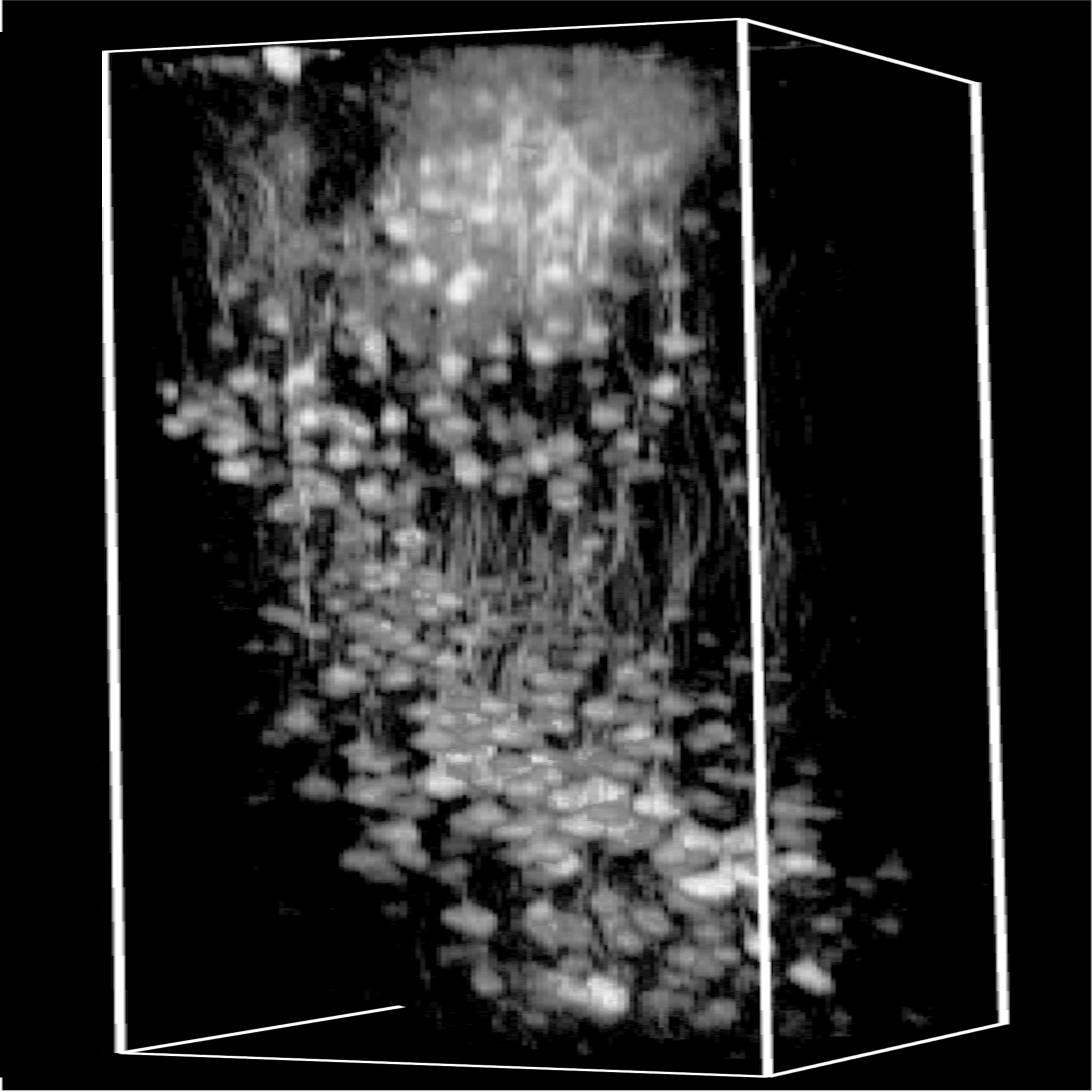
Femtosecond lasers in the 1.3–2.1 μm wavelength range are expected to be useful for applications such as deep observation of biological tissues, advanced semiconductor microfabrication, and broadband coherent mid-infrared light generation, but they are still under development. We are developing such lasers in collaboration with companies such as FiberLabs Inc.
So far, we have developed 1.3 μm, 1.8 μm, and 2 μm fiber lasers. For the 2 μm band, we have developed a mode-locked oscillator that directly generates 61 fs pulses [Opt. Express 32 38960 (2024)], a mode-locked oscillator that directly generates high-energy pulses of about 10 nJ [Opt. Express 34 7030 (2026)], and a high-power laser amplifier that generates light pulses with a duration of 265 fs and energy of about 1 mJ, and have also realized broadband coherent mid-infrared light generation [Opt. Express 30 7332 (2022)].
We have also developed 1.3 μm and 1.8 μm fiber lasers and successfully observed neurons in the brain of a living mouse in collaboration with the National Institute for Physiological Sciences [Biomed. Opt. Express 14 326 (2023), Opt. Express 31 16127 (2023), Opt. Continuum 3 1540 (2024), Opt. Express 33 10555 (2025), Jpn. J. Appl. Phys. 65 052003 (2026)]. We believe that the commercialization of these lasers will contribute to the advancement of brain science.
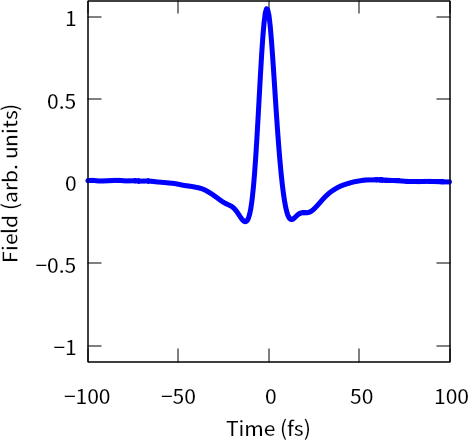
It is well known that light has wave nature, as basic as you can learn it in a high school physics class. However, it is still very difficult to directly measure the wave of light even with the most advanced technology today. This is because the period of the light wave is extremely fast, taking only a few femtoseconds (10−15 seconds).
The principal investigator of this laboratory has developed new methods to measure such waveforms of light [Nat. Commun. 4 2820 (2013), Optica 10 302 (2023), Opt. Lett. 50 7604 (2025) etc.]. These are considered to be useful methods for studies on high-field physics, ultrafast optical signal processing, and new synchrotron light source development. Currently, we are developing the technology so that this method can be used in various wavelength ranges.
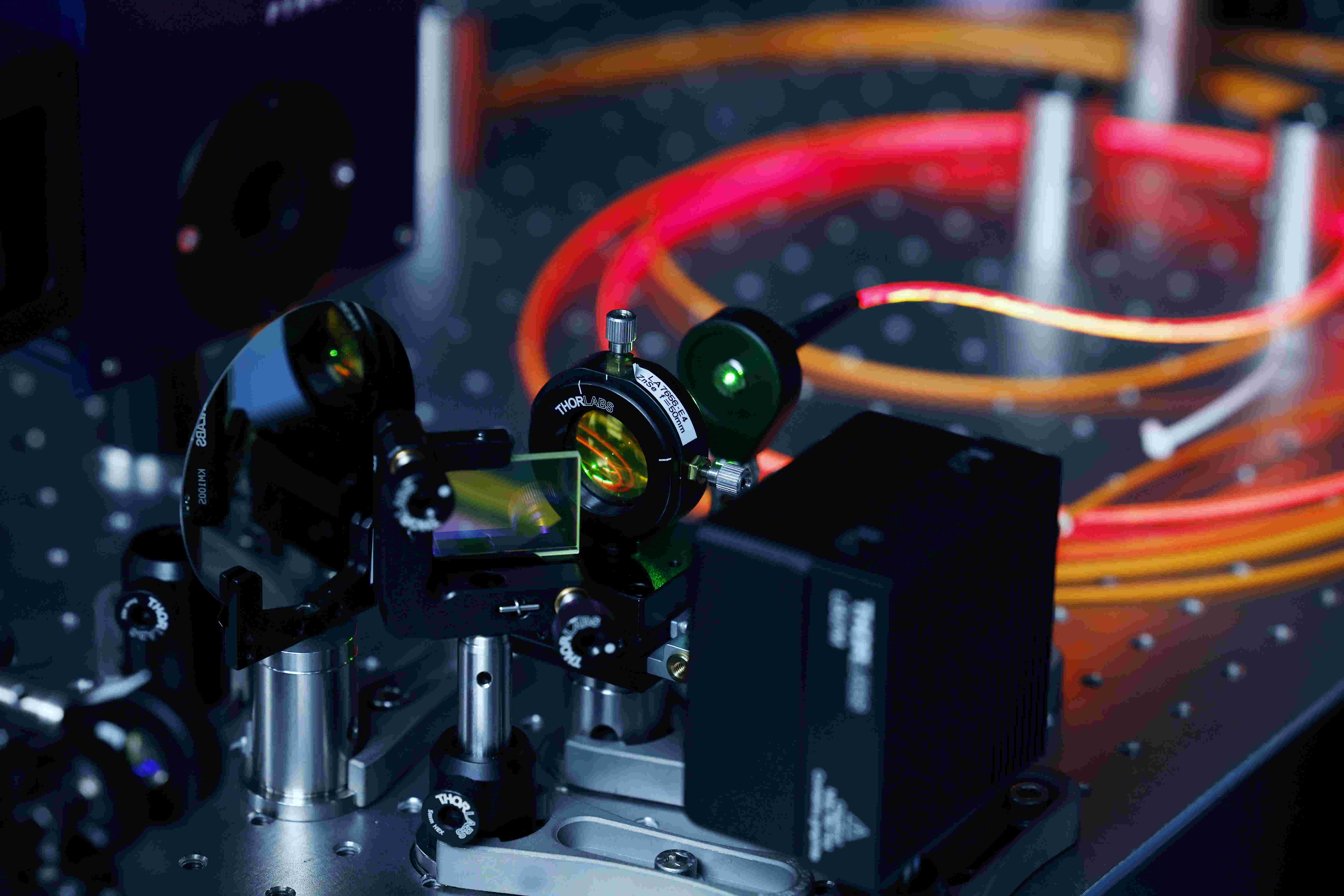
From July 2026, Associate Professor Kudo, who was a member of our laboratory, became independent and started the Nano Optical Science Laboratory in TTI. He is promoting research focused on optical manipulation using mid-infrared lasers. Laser Science Laboratory continues to collaborate on joint research, particularly in the development of light sources.
In previous research, we demonstrated opto-thermal trapping by directly heating water by exciting its molecular vibrations using 1.95 μm and 2.8 μm lasers (Tm-doped fiber laser, Er-doped fluoride fiber) [Opt. Express 29 38314 (2021), Opt. Express 32 12160 (2024)]. Opto-thermal trapping can be achieved simply by irradiating a mid-infrared laser without requiring pretreatment such as metallic thin films. Currently, we are advancing research from the development of new light sources to further improve efficiency.